🏫 School/[23-2] 객체지향프로그래밍
[C++] Variables, Constants etc...
- -
Identifier (variabes, constant etc... 이름 붙이기)
- C++언어에서 변수나 상수의 이름을 지을 때는 아래의 규칙들을 따라야 함
규칙1) 최소 한개의 character 요소 포함
규칙2) 첫번째 character는 alphabetic letter (대/소문자 무관) 또는 underscore(_)
규칙3) 나머지 character는 alphabetic letter (대/소문자 무관), underscore(_) 또는 숫자
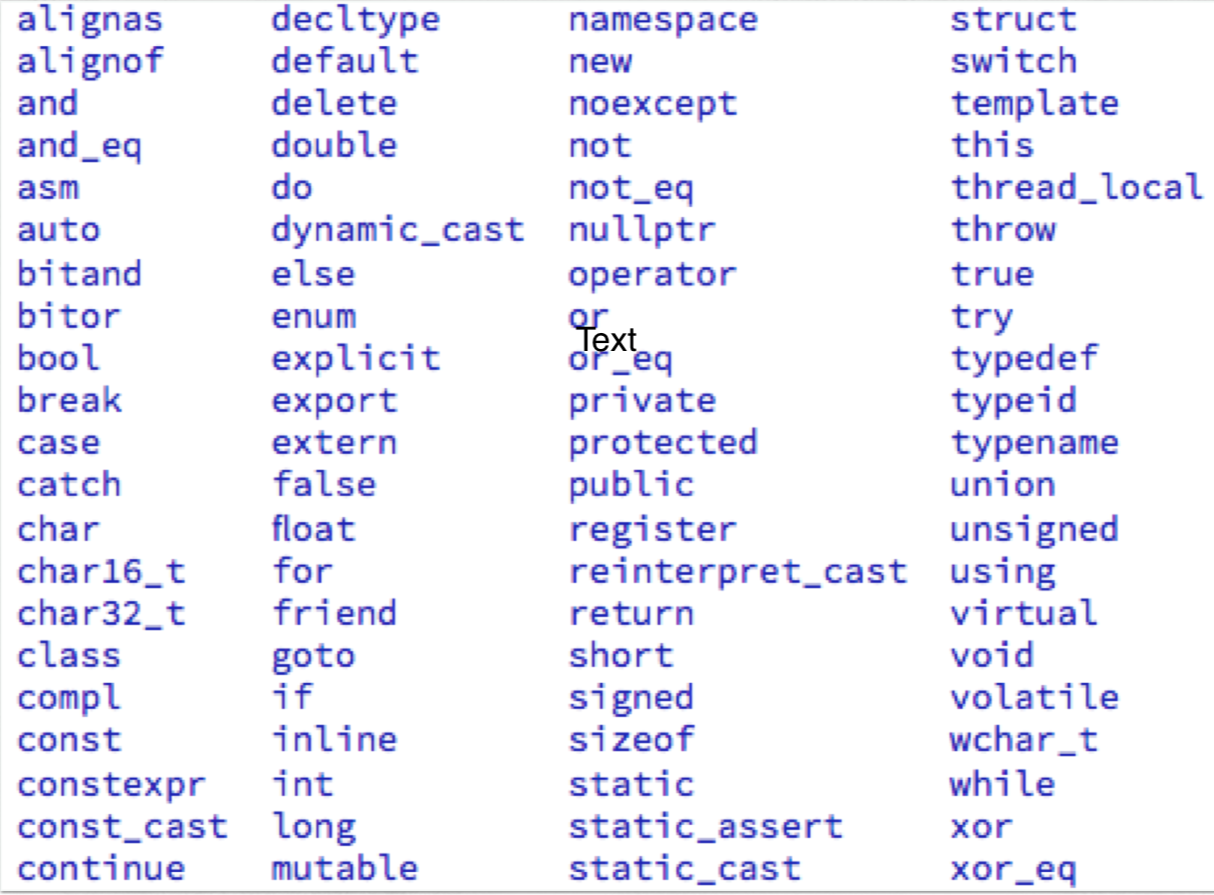
규칙4) 다른 character는 허용되지 않으며, reserved words는 이름이 될 수 없음
Variables
[Integer]
- 기본적으로 정수형 상수 변수를 의미
- 선언할 때, 앞에 붙이는 수식어에 따라 사용할 수 있는 숫자의 범위가 달라짐 (b/c 해당변수가 사용하는 저장용량이 달라짐)

/* integer 사용 예시 코드 */
#include <iostream>

int main () {
	int x;
    x = 10;
}
[Floating Point]
- 유리수 (소수)까지 표현 할 수 있는 비정수형 변수를 의미 (= non-integer type)
- 해당 변수형 역시 표현에 따라 나타낼 수 있는 범위가 달라짐 (나타낼수 있는 소숫점 아래 숫자 개수 역시 변화)

/* floating point 사용 예시 코드 */
#include <iostream>

int main (){
	double pi = 3.141592;
}
[Character]
- 'char' data type은 하나의 character를 나타내기 위해 사용되는 변수형
- 대소문자 알파벳, digit , punctuation, control characters가 character로 나타내짐
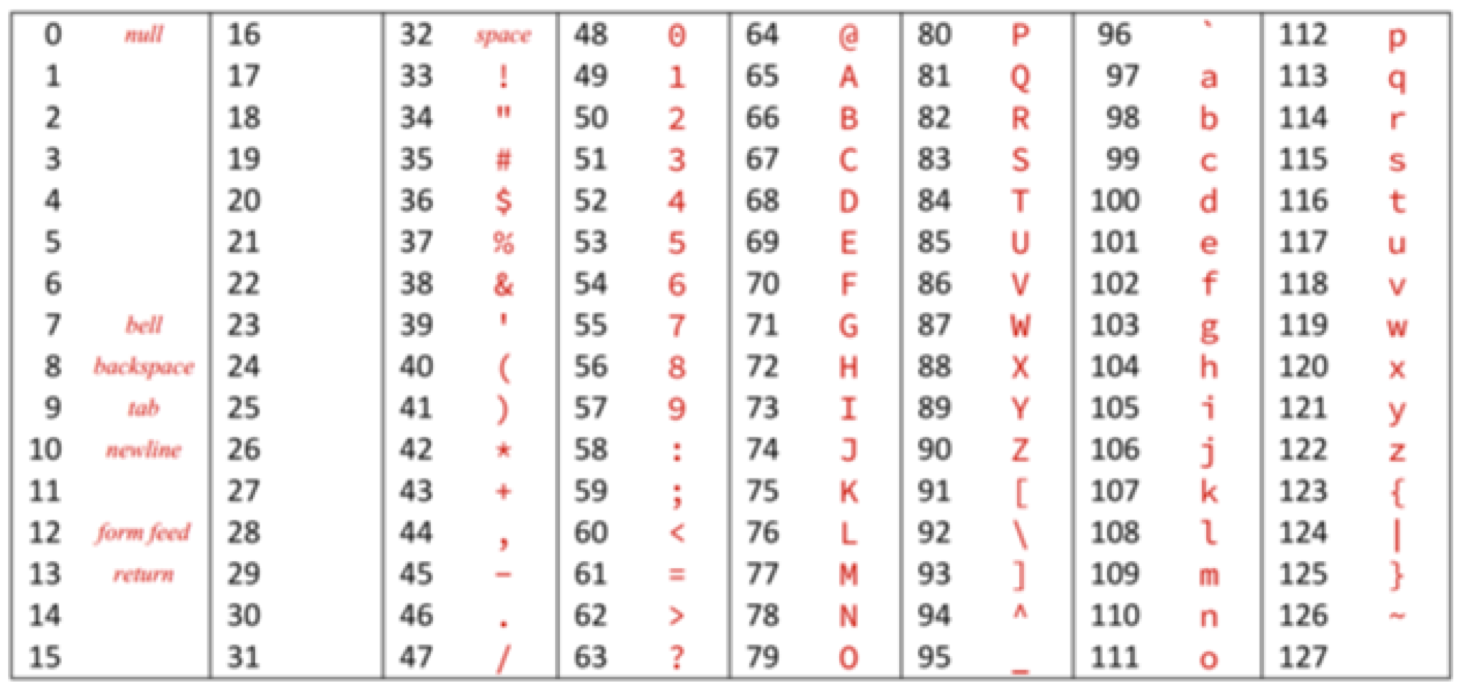
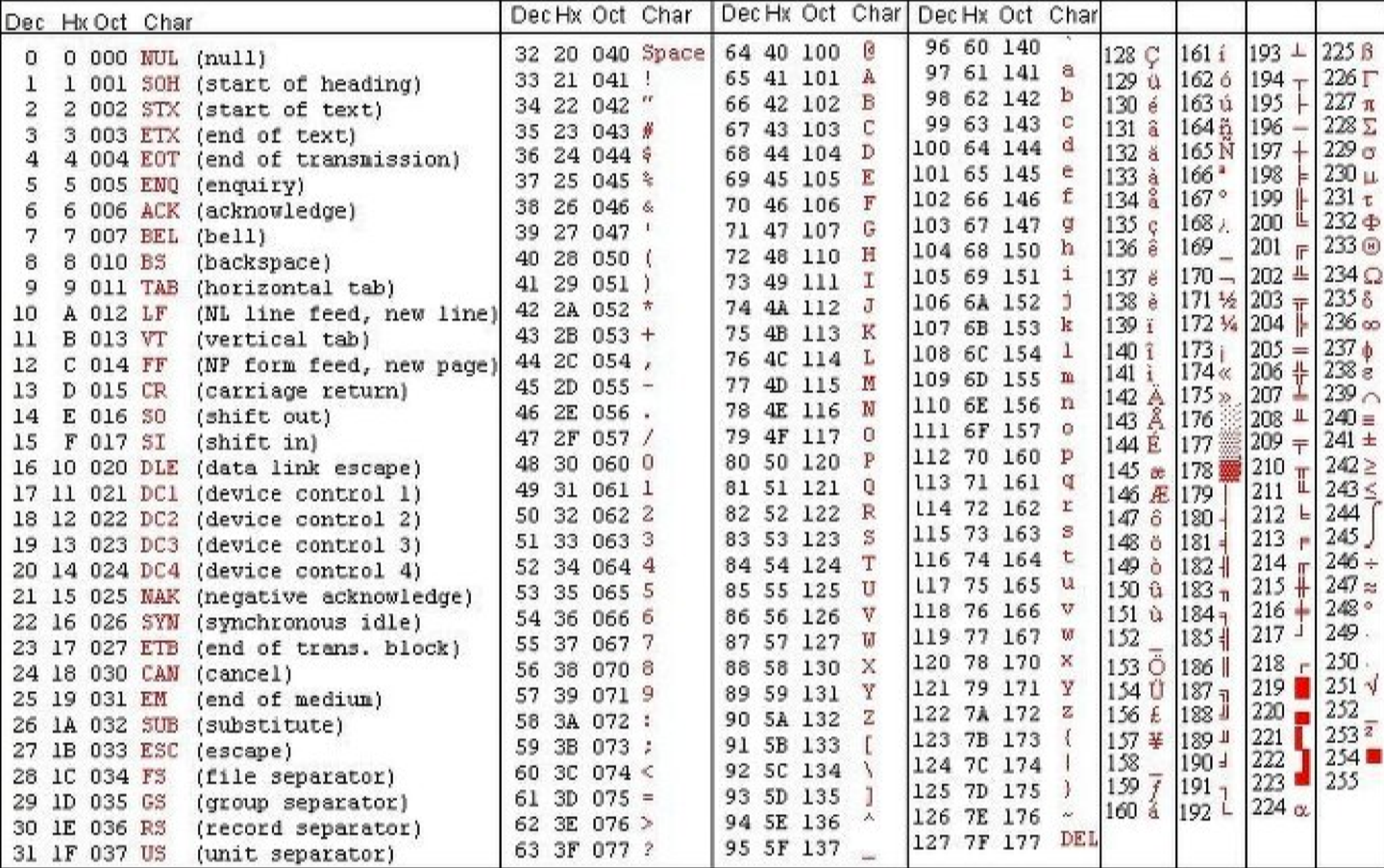
- 대부분의 character 기호들은 ASCII code로 나타낼 수 있음
#include <iostream>

int main () {
	char ch1, ch2;

    /*ASCII code Number 이용*/
    ch1 = 65;

    /*ASCII code 이용*/
    ch2 = 'A';
}
[Named Constant]
- 위의 변수형들과 다르게 바꿀 수 없는 상수를 의미
- 처음에 저장했던 상수를 바꾸려고 하면 compile error가 남
#include <iostream>

int main () {
	const double pi = 3.14159;
    double temp = 0;

    temp = pi;
    /*temp = 3.14159*/
}
[Output Stream]
cout << "Please enter two integer values : ";- 사용자가 정보를 입력하기를 요청하는 정보를 출력
[Input Stream]
cin>> value1;- 사용자가 입력 하는 정보를 value1에 할당
- 여러개의 정보를 순차적으로 받기 위해서는 순차척으로 진행하면 됨
Operators
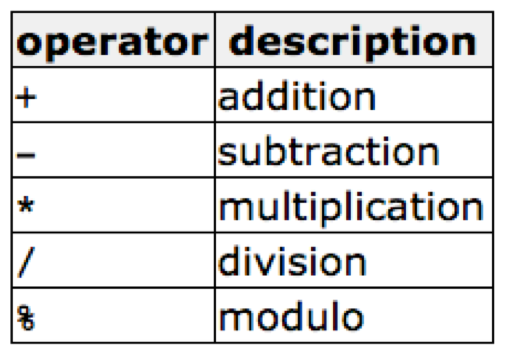
[Arithmetic Operators]
[Compound Assignments]
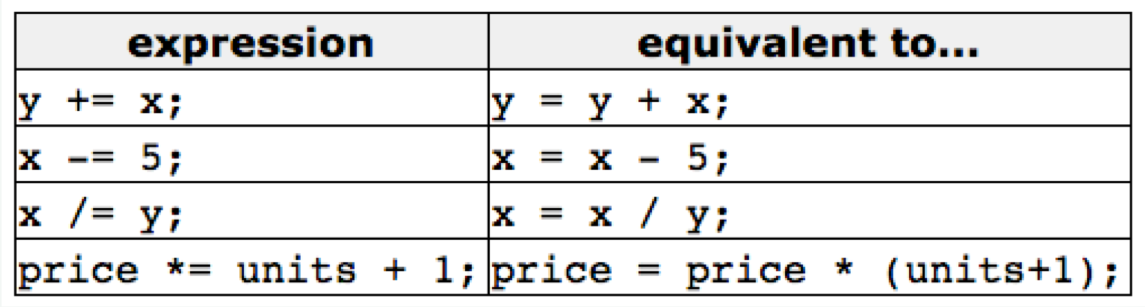
[Increase & Decrease Operator]
- '++ x ' : x에 1을 먼저 더한 후 연산에 이용
- ' x ++' : x를 연산에 사용한 후 +1
- 'x+=1' : x=x+1
- '-- x ' : x에 1을 먼저 뺀 후 연산에 이용
- ' x --' : x를 연산에 사용한 후 -1
- 'x-=1' : x=x-1
[Prefix or Suffix Operation]
x=3;
y= ++x;
// x=4, y=4

a=3;
b= x++;
//x=4, y=3
[Relational Operator]
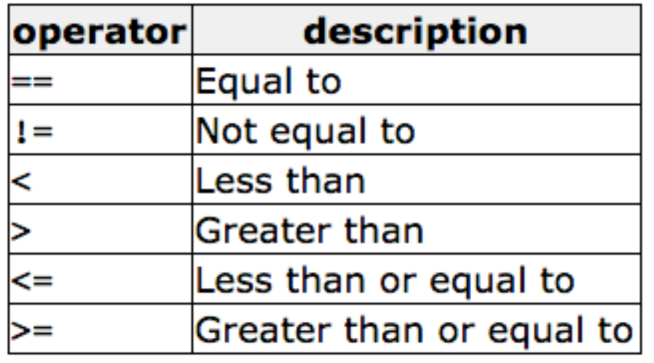
- Conditional Ternary Operator "?" : ? 기호 앞이 참 / 거짓 여부에 따라 다른 값을 내보냄
/* Conditional Ternary Operator */
7==5 ? 4:3 		// 7!=5이므로 3이 나옴
7==5+1 ? 4:3 	// 7=5+2이므로 4가 나옴
5>3 ? a:b 		// 5>3이므로 a가 나옴
a>b ? a:b		// 둘 중에 큰 값을 나타냄
[Examples]
//assignment operator
#include <iostream>
using namespace std;

int main () {
	int a,b;
    a=10;
    b=4
    a=b
    b=7
    // 결과적으로 a=4, b=7
}
//compound assignment operator
#include <iostream>
using namespace std;
int main () {
int a, b=3;
a=b;
a+=2;
//결과적으로 a=5, b=3
}//conditional operator
#include <iostream>
using namespace std;
int main () {
int a, b, c;
a=2;
b=7;
c=(a>b) ? a:b;
// 결과적으로 a=2, b=7, c=7
}Comments (주석)
[Enhance Readability]
- Compiler가 무시하고 지나감
- Programmer들의 편의를 위해 존재
// 한 줄 짜리 주석

/*
* 여러줄 짜리
* 주석
*/
참고 내용 )
- 변수의 이름을 설정할때 띄어쓰기를 표현하고 싶으면 대문자를 이용한다. ex) BookShelf
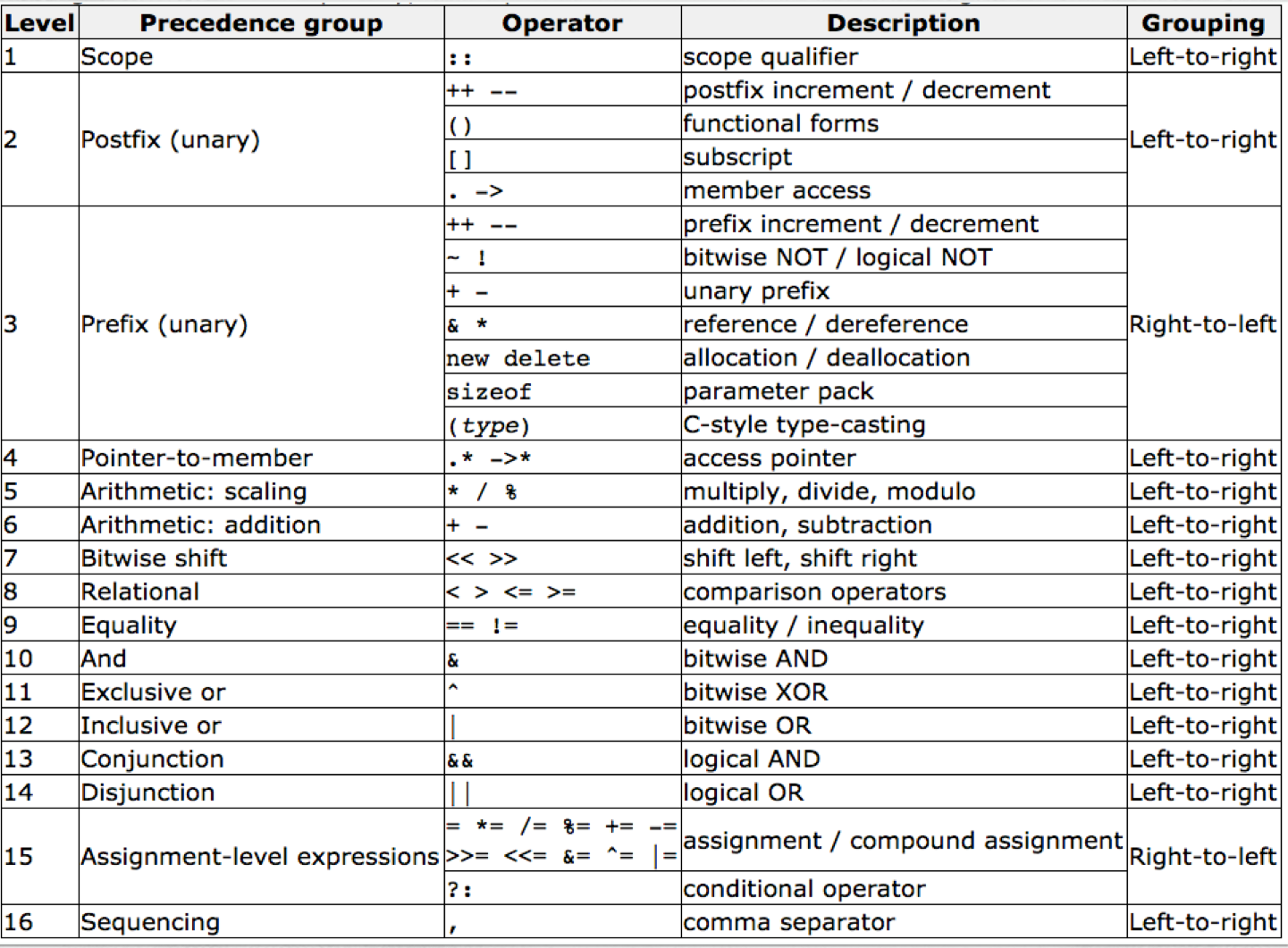
- 아래 표는 operator들의 우선 순위와 방향에 대한 표이다
'🏫 School > [23-2] 객체지향프로그래밍' 카테고리의 다른 글
| [C++] 조건문과 반복문 (2) (0) | 2023.10.04 |
|---|---|
| [C++] 조건문과 반복문 (1) (0) | 2023.10.04 |
| [C++] 함수에 대한 기본 설명 (2) (0) | 2023.10.04 |
| [C++] 함수에 대한 기본 설명 (1) (0) | 2023.10.03 |
| [C++] Basic Structure of C++ Program (0) | 2023.09.27 |
Contents
소중한 공감 감사합니다